
Why Funeral Videography Matters
A funeral is the only gathering that will ever bring together exactly these people, in exactly this place, for exactly this person. It happens once — and then it is gone. Funeral videography is how families keep it.
I'm Shaun, and I've personally filmed over 2,500 funerals across the UK over the past ten years. I work with families of every faith, culture and background — Hindu, Sikh, Caribbean, Jamaican, Nigerian, Greek Orthodox, Jewish, Chinese, and many others — and I understand that each ceremony carries traditions, rituals and moments that matter deeply, not just to the people in the room on that day, but to generations to come.
This guide explains why funeral videography matters, how it differs from live streaming, and how I approach filming in a way that is discreet, respectful and true to the family and the culture I am working with.
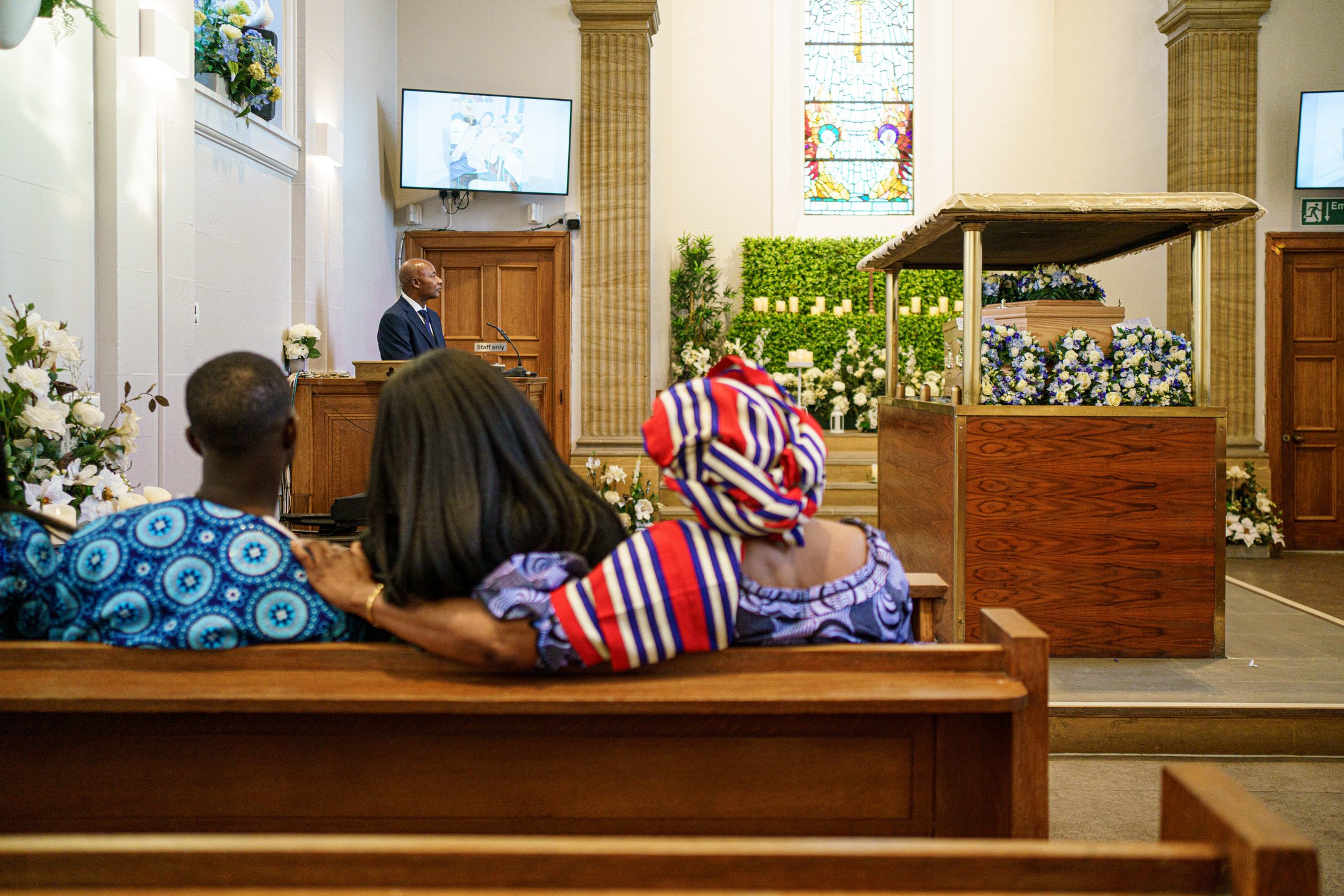

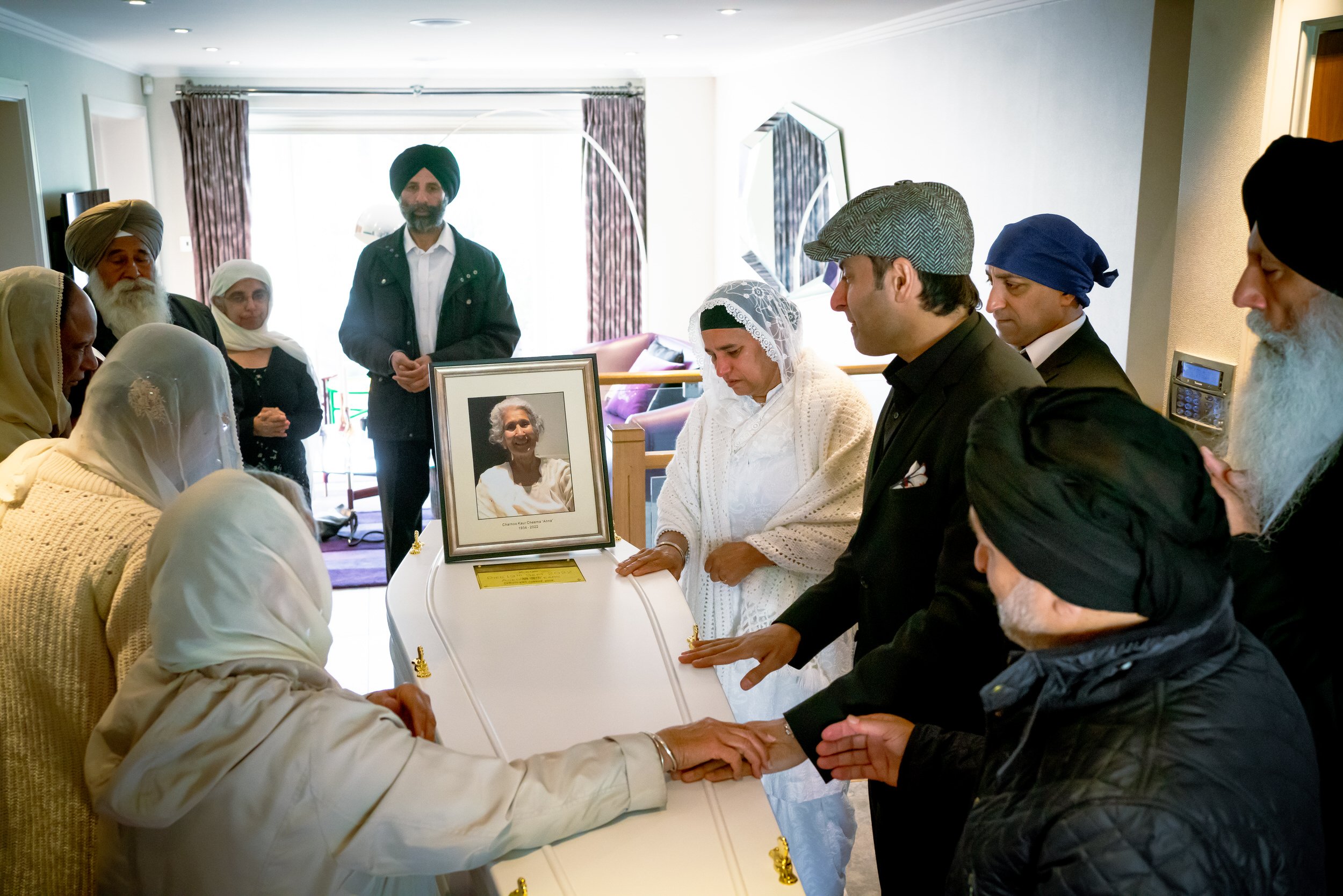
What Funeral Videography Is — and How It Differs from Live Streaming
Funeral live streaming and funeral videography are related but different things. Live streaming is broadcast — a real-time feed that allows people who cannot attend to watch the service as it happens. Videography is a crafted film. It is filmed on the day, edited carefully afterwards, and delivered to the family as a polished, lasting record of the service.
The difference in quality and feel is significant. A live stream is necessarily raw — it captures what is happening in real time, and the result is immediate rather than refined. A funeral film, by contrast, can be edited to tell the story of the day more fully: multiple camera angles cut together, audio balanced and cleaned, the beginning and end shaped so that the film holds together as something the family will want to return to again and again.
For many families, both have a role. The live stream ensures that those who cannot attend see the service on the day. The videography film gives the family something they can keep, share, and show to children and grandchildren who were too young to understand or remember. My guide on funeral filming vs live streaming explains the differences in more detail to help families decide which is right for them.

Why the Day Passes in a Blur — and Why That Makes Videography Valuable
One of the most consistent things families tell me, in the days and weeks after a funeral, is that they cannot fully remember it. Not because they were not paying attention — but because grief does something to memory. The emotional weight of the day, the adrenaline of arranging everything, the exhaustion of holding it together — all of it means that the detail often slips away faster than people expect.
Videography gives that detail back.
It gives families the words of the eulogies — the exact phrases, the specific stories, the moments that made everyone laugh or suddenly cry. It captures the music as it sounded in the room, not as it is remembered. It shows who was there, how the venue looked, the flowers, the order of service, the small gestures between people. It records the moments that happened at the edges — a child holding a grandparent's hand, two old friends embracing outside, the quiet moment before the service began.
These are the things families return to. And they are the things that, without a film, simply fade.
The Significance of Cultural Traditions in Funerals
The UK is one of the most culturally diverse countries in the world, and that diversity is reflected in the funerals I film. Different communities observe death and remembrance in profoundly different ways, and filming those traditions with understanding and sensitivity is something I take seriously.
Hindu Funerals
Hindu funerals often include the chanting of mantras, sacred rituals performed by the pandit, prayers for the departed soul's peaceful journey, and — where the cremation itself is accessible — the lighting of the funeral pyre by the eldest son. The ritual is layered and purposeful, and each element carries spiritual meaning that the family will want preserved.
I work closely with the family and the pandit in advance to understand the order of service, which rituals are most significant, and where the camera should and should not be. The aim is to film the ceremony in a way that is true to its spiritual weight — not just recording what happened, but capturing why it matters.
Sikh Funerals
The Sikh funeral — Antim Sanskar — centres on community prayer, the recitation of Gurbani, and readings from the Guru Granth Sahib. Kirtan, the singing of sacred hymns, is often the heart of the service, and the atmosphere in a gurdwara during a Sikh funeral is unlike anywhere else — deeply devotional, communal and filled with the sound of prayer.
I approach Sikh funerals with particular care about positioning — remaining unobtrusive during sacred readings and ensuring that the presence of a camera does not interrupt the spiritual atmosphere. The family's comfort and the integrity of the ceremony always come first. You can see an example of my work at the Sikh funeral at Sri Guru Singh Sabha Gurdwara in Slough.
Caribbean and Jamaican Funerals
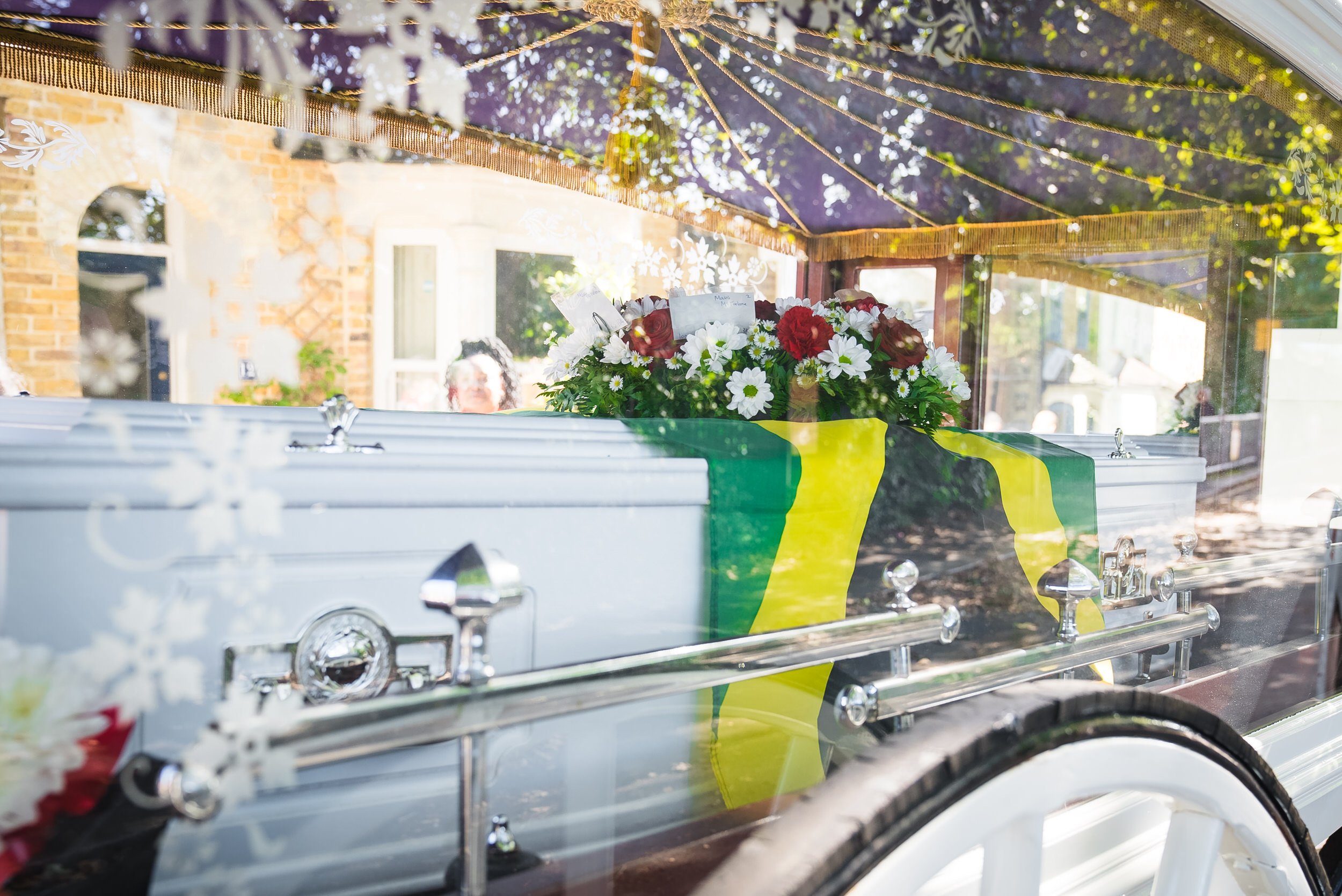
Caribbean funerals — particularly Jamaican, Barbadian, Trinidadian and other West Indian services — are among the most vibrant, expressive and community-centred funerals I have the privilege of filming. They blend Christian faith with cultural traditions that vary by family, denomination and island heritage.
These are not quiet, restrained affairs. They are community gatherings in the fullest sense — large churches packed with sound, choirs that sing in waves, family members who stand and testify, and graveside celebrations that can last several hours, with singing, drumming, and the backfilling of the grave as an act of love and collective farewell. The tone is not only grief — it is celebration of a life, and the filming needs to reflect both.
Capturing the energy, the music, and the cultural specifics of a Caribbean funeral well requires experience and genuine familiarity with the tradition. I've filmed hundreds of these services and understand what the family will want to see when they watch the film back — and what will matter most to relatives watching from Jamaica, Barbados or Trinidad.
Nigerian and West African Funerals
Nigerian funerals in the UK are extraordinary events. They are large, long, and often elaborate — multi-day affairs that bring together extended families, church communities, cultural groups, and well-wishers, with colour, ceremony, music and celebration woven throughout.
The church service typically includes powerful choral singing, prayers in English and local languages, tributes from family and community leaders, and a rich use of traditional dress. The graveside element often involves drumming, more singing, and the filling of the grave by close family as an act of final respect.
For Nigerian families, the film is often not just a personal keepsake — it is something that will be shared widely within the community, shown at memorial gatherings, and watched by relatives across Nigeria and the diaspora. The quality of the filming matters enormously, and the finished film needs to do justice to the scale and significance of the day. You can see an example in my Nigerian funeral streaming and videography case study.
Greek Orthodox Funerals
Greek Orthodox funerals follow a specific liturgical structure, conducted partly or entirely in Greek, with incense, candles, the chanting of prayers and the veneration of the icon. The atmosphere is contemplative and deeply traditional, and filming it well means understanding when to be still and when to move, and how to capture the ritual without disturbing it.
For Greek families with relatives watching from Greece or the diaspora, having a clear, well-filmed record of the liturgy and the final farewell at the graveside is deeply important — both practically and as an expression of respect. You can see an example of this in my Greek Orthodox funeral photography case study from Crystal Palace.

Preserving Traditions for Future Generations
Beyond the immediate comfort of having a record, funeral videography serves a longer purpose. The rituals filmed today become the inheritance of the next generation.
A Hindu family in the UK may want to show their children, years from now, what a proper Antim Sanskar looks like — the prayers, the sacred fire, the gathering of community. A Sikh family may want grandchildren who grow up in a different country to understand the sound of Kirtan at a funeral service. A Jamaican family may want a great-grandchild, not yet born, to one day see how their community came together to honour someone they loved.
These are not abstract possibilities. Families tell me this directly. The film becomes part of how a family understands itself — its faith, its roots, its way of marking what matters.
My Approach: Discreet, Respectful, Culturally Aware
Funeral videography is not just a technical skill. It requires the ability to move quietly through a ceremony, anticipate key moments, understand cultural and religious context, and make decisions about where to point a camera that are guided by sensitivity as much as by craft.
I arrive early at every funeral I film — well before guests arrive — to set up, speak with the funeral director and officiant, understand the running order, and plan where cameras will and will not go. Once the service begins, I work in the background. The aim is always the same: to be invisible enough that the family can forget about the camera and be fully present — and then, when they watch the film back, to feel that everything that mattered was captured.
I use professional cameras, dedicated microphones at each speaking point, and careful positioning to ensure both the visual and audio quality are as high as possible. Every film I deliver is individually edited — not batch processed, not filtered — so the pacing, the music, and the structure reflect the specific character of that service and that family.
You can see examples of my finished work in my funeral videography portfolio.

Funeral Videography and Live Streaming Together
Many families choose to have both funeral videography and live streaming on the same day. This is something I can provide as a single combined service — managed entirely by me, with no need for a second operator.
The live stream gives people who cannot attend the ability to watch on the day, in real time. The videography film gives the family a crafted, edited record to keep. The two serve different purposes and complement each other well.
Where I am providing both, I integrate them — so tribute films and slideshows can be played full screen through the live stream, the audio is consistent across both, and the family has a single point of contact for everything. My guide on funeral filming vs live streaming explains how the two work together in practice.


How to Book
I'm Shaun, and I handle every funeral film personally — from the first conversation through to the final edit and delivery.
If you are arranging a funeral and would like to discuss videography, live streaming, photography, or any combination, I'm available seven days a week from 9am to 10pm.
Call or text me on 07772 509101, or get in touch online. I'm happy to talk through what you are planning and advise on what would work best for your family.
Related pages and guides: