
Is Funeral Photography Right for YOur Family?
Every family approaches funerals differently. Some know straight away that they'd value a record of the day; others feel unsure and want to understand how funeral photography works before deciding. There's no right or wrong answer. The most important thing is that whatever you choose feels respectful, comfortable and true to the person who has died.
I see funeral photography as a gentle way to remember the love, support and details that can be hard to take in at the time — especially when the death is unexpected, when people are travelling from all over the world, or when the funeral involves important cultural or religious traditions.
You may find it helpful to look at my funeral photography portfolio alongside this guide, to see how quiet, documentary-style coverage looks in practice.
Why Some Families Choose Funeral Photography
Funeral photography is still less common than wedding or family photography, but it has become far more familiar in the UK over recent years. Families who choose a specialist funeral photographer usually mention one or more of these reasons.
A record of a once-in-a-lifetime gathering Funerals often bring together people who haven't been in the same place for years, and may not be again for a long time. Quiet photographs of arrivals, hugs, handshakes and conversations outside the church, chapel, graveside or reception can become a gentle record of the support that surrounded your person.
Remembering details when the day is a blur Many families say the day passed in a fog — they remember certain moments clearly, but much of it feels hazy afterwards. Thoughtful photographs of the venue, flowers, order of service, personal items, candles, and small gestures help them look back later and see details they missed at the time.
Sharing the day with people who couldn't attend Some relatives will be overseas, unwell, or unable to travel. My funeral live streaming services can help them join in real time, and a set of photographs gives them a quieter way to experience the day afterwards, at their own pace. Many families choose to share a private gallery link with close friends and relatives when they feel ready.
Supporting grief and remembrance For some people, seeing the care that went into the funeral — the way the coffin was carried, the expressions on people's faces, the way the community gathered — helps their grief to feel witnessed and held, rather than hidden away. Others prefer to remember in different ways and choose not to have photography at all. Both choices are completely valid.
My Approach: Calm, Sensitive, Documentary-Style
When I photograph a funeral, my aim is not to chase drama or zoom in on raw grief. I'm looking for moments of grace and compassion, and to tell the story of the day in a calm, honest way. That same documentary approach runs through my funeral videography and celebration of life services as well.
Working at the Edges, Not in the Middle
I use professional cameras and lenses with varying focal lengths so I can stay at the edge of what's happening, rather than in the middle of it. In practice that means I can:
Stay towards the back or side of the church or chapel and still photograph key moments such as the coffin arriving, readings and hymns
Step back when the family gathers around the coffin at home or during an open-coffin farewell, and still record the shape of the moment without intruding
Move quietly around outdoor gravesides, natural burials or busy receptions, watching for small, unscripted gestures instead of directing people
The goal is always the same — to be present enough to tell the story honestly, but distant enough that people can forget about the camera and be fully themselves.
Documentary, Not Posed
My style is documentary and storytelling-led. In most cases I do not stage formal group photographs, or only do so if the family specifically asks. Instead, I concentrate on:
Arrivals and farewells
Readings, eulogies and music, usually from a respectful distance
Quiet exchanges between people
Details like flowers, candles, orders of service and personal items
The flow of the day from home, to service, to graveside or reception
Knowing When to Step Back
After photographing and filming over 2,500 funerals across the UK, I'm very aware of when it's time to lower the camera and simply step away.
When very emotional moments arise — a family gathering around the coffin at home, a raw graveside farewell, or an open-coffin moment in certain traditions — I usually stand at a distance and use longer lenses, or sometimes choose not to photograph at all if the moment feels too private. The family's comfort always comes before getting the shot.
Experience Across Ages, Faiths and Cultures
No two funerals are ever the same. The age of the person, their background, faith and community all shape how the day feels and what is appropriate to photograph.
Baby, Child and Teenager Funerals
Funerals for babies, children and teenagers are especially sensitive. In these situations I:
Take my lead very closely from the parents or guardians
Tend to photograph more of the surroundings and gentle details, and less of close-up expressions
Move even more slowly and carefully, and am ready not to photograph certain parts of the day at all if that feels right
Sometimes families ask me to focus mainly on the setting, flowers, personal items and tributes. Others feel strongly they want a complete record of the day. I'll always work around your preferences and am happy to talk through options beforehand.
Multi-Faith, Cultural, Military and Service-Led Funerals
Over the years I've photographed and filmed a wide range of services and traditions, including:
Church of England and Catholic funerals in traditional churches
Caribbean and African services, often with open coffins, large choirs, congregational singing, and practices such as backfilling the grave
Sikh, Hindu, Greek Orthodox, Jewish and Chinese funerals
Military funerals and services for the armed forces, including the Royal Navy and regimental services at Wellington Barracks and Sandhurst
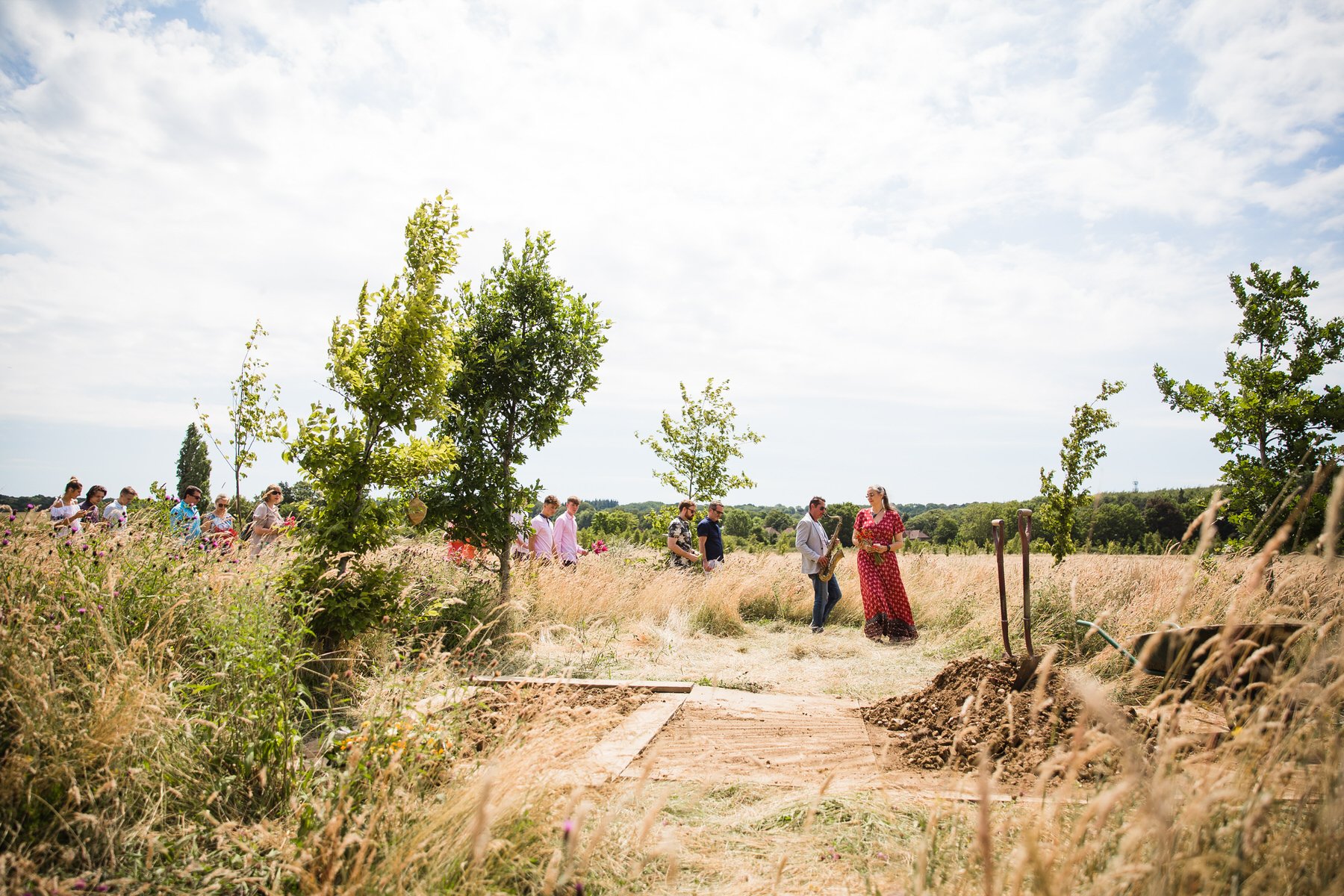
Natural burials in woodland and meadow settings
Intimate moments where family members help to prepare the body or place personal items in the coffin before the funeral
In some cultures, families place photographs, letters and personal belongings in the coffin. In others, offerings such as butter, coconuts and other items are set in place as part of the ritual. I only photograph these moments when the family has asked me to and when it is appropriate within their tradition. Where there is any doubt, I ask in advance or quietly step back.
Who to Talk to Before Deciding
If you're considering funeral photography, it helps to speak with a few key people so everyone understands what you're planning.
Immediate Family
Start with those closest to the person who has died. For some families, everyone is immediately comfortable with the idea; for others, it brings up mixed feelings. When that happens, what I usually hear is not "absolutely not" — but a very reasonable request that I work from more of a distance and stay as unobtrusive as possible. That is exactly how I prefer to work anyway.
Navigating Different Views Within the Family
It's quite normal for people in the same family to feel slightly differently about this. In my experience, situations where this becomes a real problem are very rare. Most of the time, once the day is underway and people see how discreetly I work, they quickly relax. Many families tell me afterwards that they hardly noticed I was there at all — and that is exactly what I aim for.
When I know there are mixed feelings, I take extra care: I keep an even lower profile, respect the wishes of anyone who does not want to appear in photographs, and quietly adjust where I stand and what I capture.
Funeral Director
Most funeral directors are now very familiar with funeral photography, as well as funeral live streaming and funeral videography. Letting them know that you've chosen to have a photographer is both practical and courteous. Your funeral director can advise on any specific protocols at the venue and let the bearers and staff know what to expect.
Officiant or Celebrant
If there is a minister, priest, imam, rabbi or other faith leader leading the service, it's always a good idea to let them know a photographer will be present. Some are very relaxed; others have clear boundaries around photography during specific prayers or rituals. Talking this through beforehand avoids any surprises on the day.
Photographer
A short call with your chosen photographer can make a big difference. It's a chance to hear how they speak about funerals, to sense whether their manner feels calm and steady, and to check their experience matches what you need. It can help to explain what kinds of images you're hoping for, talk through any cultural or family sensitivities, and agree which parts of the day will and won't be photographed.

What Is Usually Photographed — and What Isn't
Every family is different, but these are common choices.
Often photographed:
The venue — church, chapel, graveside, natural burial site or reception
Flowers, the hearse, personal items and the order of service
Arrivals and people greeting one another
The coffin arriving and being carried, from a respectful angle
Readings, eulogies and music, usually from the side or back
Interactions and atmosphere at the reception or wake
Often not photographed unless clearly agreed:
Very close-up, intensely private moments of distress
Anyone who has asked not to be photographed
Particularly sensitive rituals or open-coffin moments, if the family would prefer these to remain unwitnessed by the camera
All of this can be discussed in advance. Nothing is photographed or shared without clear consent.
When Funeral Photography Might Not Be Right
It is just as valid to decide that you don't want photography. It may not be the right choice if:
The immediate family cannot agree, or the idea causes tension
The person who has died was very private and you feel strongly they would not have liked it
The service will be extremely small and intimate and you'd prefer to keep it completely camera-free
You feel the presence of a photographer would make you self-conscious or hold you back
In those situations, you might prefer other ways of remembering — a memorial gathering at a later date, a tribute video or slideshow created from existing photos, or a simple collection of images taken before or after the service.
What Sets My Funeral Photography Apart
Depth of experience
I've photographed and filmed well over 2,500 funerals across the UK — from small village chapels to packed city churches, civic crematoria, natural burial grounds and multi-faith venues. That depth means I can anticipate how the day will unfold, understand where to be at each moment, and move quietly without needing direction. Families and funeral directors often say there is a calmness in knowing I've seen most things before and can simply get on with the work without fuss.
High-quality, storytelling-led images
My photography is rooted in documentary storytelling rather than formal posing. I'm always looking for small, honest moments — a hand on a shoulder, a glance across a pew, the way light falls as the coffin is carried in, mourners placing flowers. The aim is to create a sequence of images that reads almost like a story, so when you look back you can feel how the day unfolded. You can see this in my funeral photography portfolio.
Specialist equipment used with discretion
I use professional cameras and lenses chosen specifically for funerals — quiet shutters, excellent low-light performance for churches and winter afternoons, and longer focal lengths that allow me to work at the edges rather than the middle. This means I can stay physically further away while still capturing what matters, particularly during sensitive moments.
Calm, sensitive presence on the day
However good the equipment, what families tend to remember is how it felt to have me there. I arrive early, take time to speak with the funeral director, officiant or celebrant, and quietly map out where I will and won't be during the service. Once things begin, I blend into the background. Again and again, families tell me afterwards that they hardly noticed the camera at all — until they saw the photographs.
Real understanding of faiths, cultures and ages
Because I've worked across so many different kinds of funerals — Caribbean and African services, Sikh and Hindu rituals, Greek Orthodox and other liturgies, Jewish and Chinese customs, natural burials, military funerals, and very delicate baby and child funerals — I know that "respectful" looks different in each context. I take time to listen, understand what matters in your tradition and in your family, and shape how I work around that.
A reputation built on families' recommendations
Much of my work comes from families, celebrants and funeral directors who have seen me at another funeral. They watched how quietly I worked, saw the quality of the final images, and chose me because they want that same level of care for someone they love. You can read some of their words on my testimonials page.
How to Get Started
If you'd like to talk through whether funeral photography might be right for your family, I'm always happy to have a conversation before you commit to anything — no pressure, no obligation.
Call or text me on 07772 509101 — I'm available seven days a week from 9am to 10pm — or get in touch online.
Related pages and guides: