Is It Respectful to Live Stream a Funeral?
Quick Answer
Yes — when handled properly, live streaming a funeral is a respectful and widely accepted way to include those who cannot attend in person.
For many families, it provides real comfort knowing that distance, illness, or personal circumstances do not prevent loved ones from being part of the service. When carried out with care, discretion, and sensitivity, funeral live streaming supports the service rather than distracting from it — allowing people to feel connected and involved, wherever they are in the world.
Why Some People Worry About Live Streaming a Funeral
It is completely natural to have questions or concerns about live streaming such a personal and emotional occasion.
Families often wonder whether cameras will feel intrusive, whether the service will remain private, or whether filming equipment could affect the atmosphere. Others may be concerned about how sensitive moments are handled, or who will be able to access the stream.
These are all valid concerns — and they are exactly why the way a funeral is streamed matters so much.
What Makes Funeral Live Streaming Respectful?
Respect comes down entirely to how the service is handled.
Having personally streamed over 2,500 funerals across the UK over ten years, I've developed a clear understanding of what is appropriate, when to move, and when to remain completely still. This experience guides everything I do, ensuring that each service is approached with dignity, sensitivity, and care.
My aim is always to be as unobtrusive as possible. I use a discreet setup that doesn't draw attention, and everything is prepared well before guests arrive so there is no unnecessary movement during the service. Once the service begins, I work quietly in the background, allowing the focus to remain entirely on the moment itself.
Every funeral is different, and I never assume that one approach fits all. This is especially important when working across different cultures and traditions.
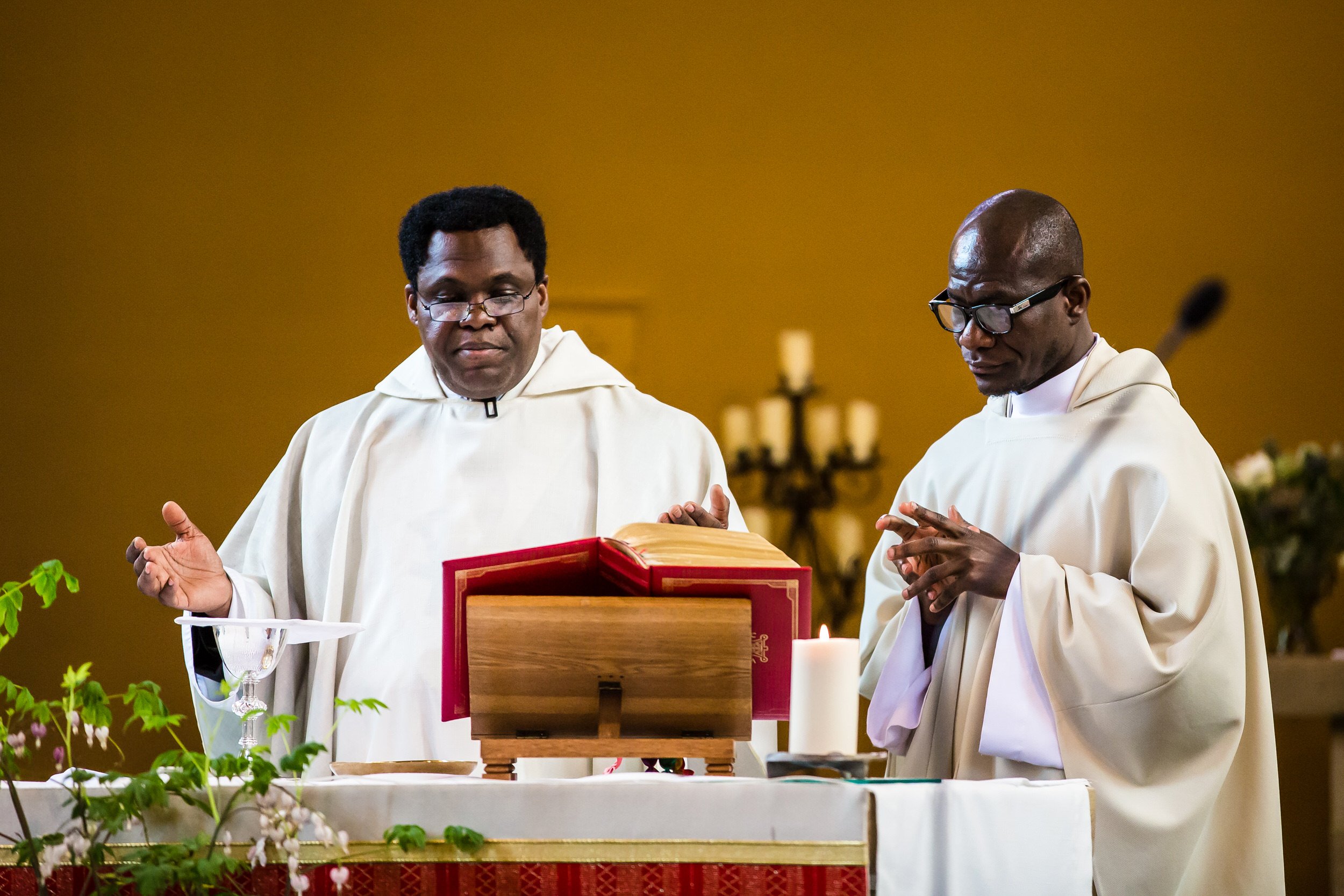
For example, in services where an open coffin is present, I always speak with the family in advance about their preferences. In some cultures — particularly many Caribbean and African funerals — it is important for those watching from abroad to be able to see the person in the coffin as part of saying goodbye. In these cases I position the cameras higher so this can be respectfully included in the stream. In other situations, families prefer more privacy, and I position cameras lower so that only the side of the coffin is visible. These decisions are always guided by the family, and I take time to talk through every detail beforehand.
There are also times when families prefer not to have the congregation filmed at all, choosing to focus only on what is happening at the front of the service. I always respect this completely. Even when filming is permitted, I'm mindful never to focus on individuals in moments of grief or distress. Instead, I remain at a respectful distance, often using wider shots that preserve the atmosphere without becoming intrusive.
At the same time, funerals are not only about sadness — they are also about remembering a life. When appropriate, I gently capture moments of warmth, such as shared smiles, meaningful reflections, or a congregation singing together — always in a way that feels natural and never forced.
How I Ensure Every Funeral Is Streamed Respectfully
I arrive well in advance to set everything up before guests begin to arrive, ensuring there is no disruption or visible fussing with equipment during the service. Cameras are positioned carefully so they remain unobtrusive, allowing the focus to stay where it should be — on the service itself.
Everything is guided by the family. I take time to understand what they are comfortable with, how they would like the service to be shared, and any specific preferences they have. If there are cultural considerations, sensitivities around specific parts of the service, or individuals who have asked not to be filmed, I factor all of that in.
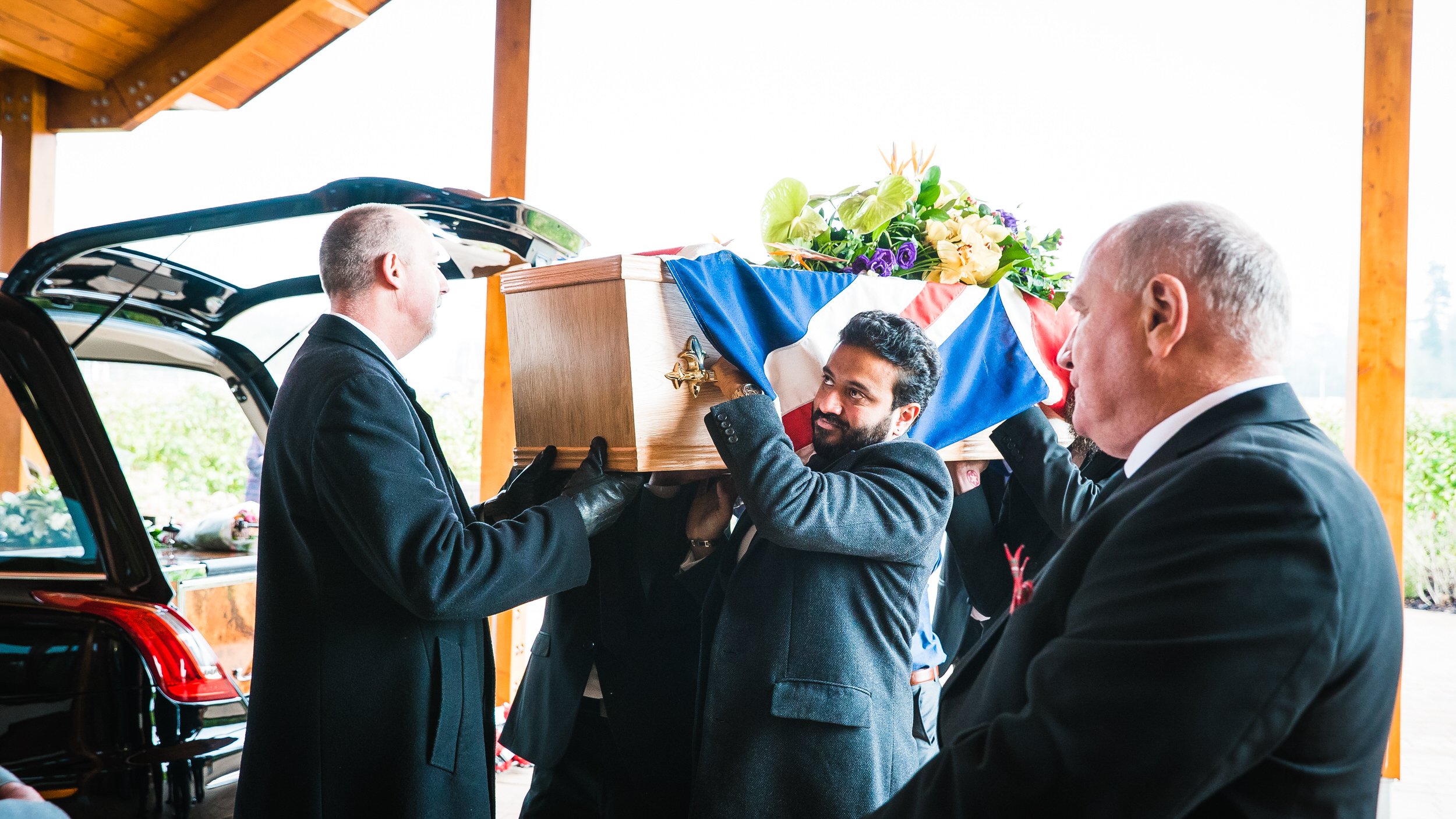
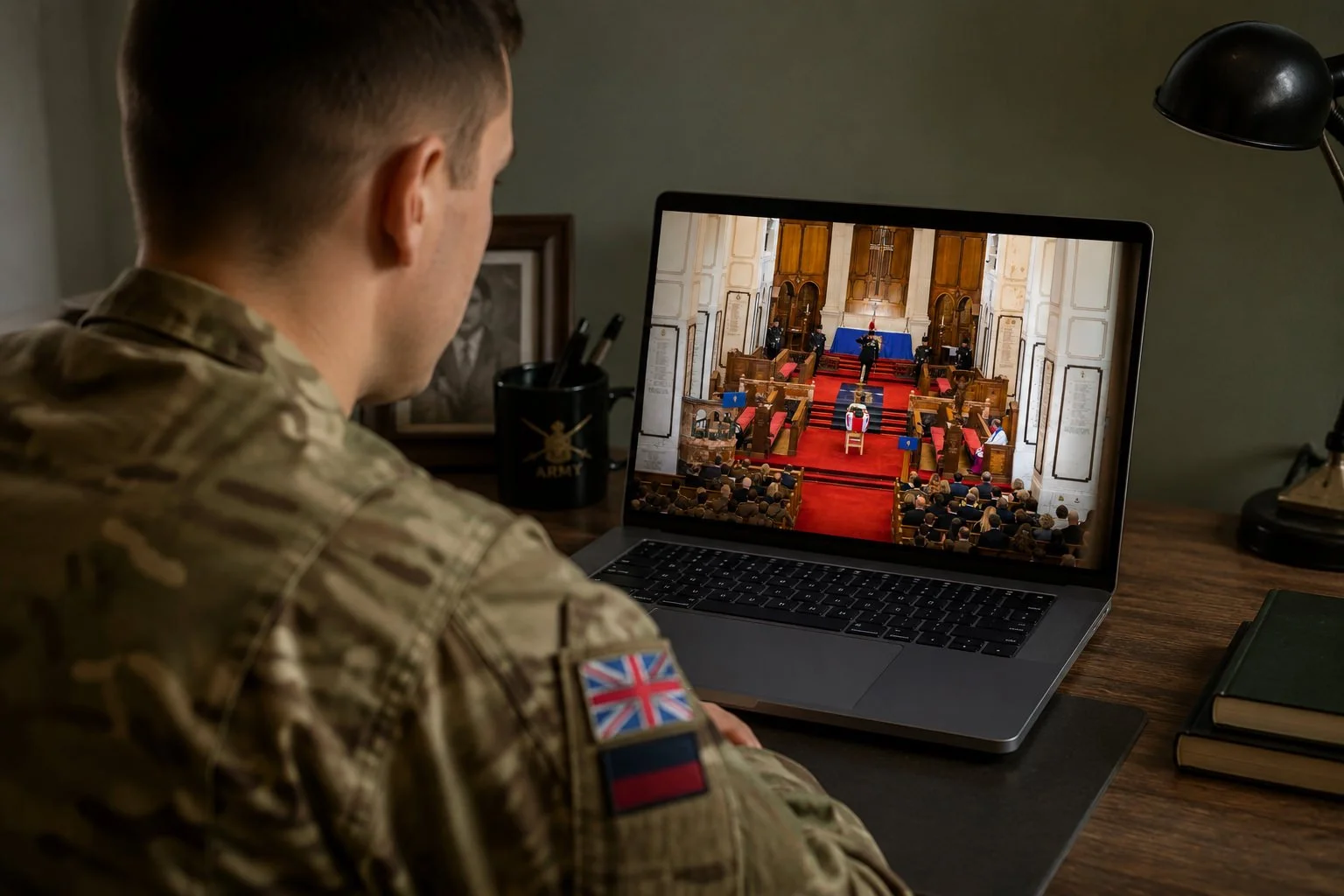
You can see how this looks in practice in my funeral streaming examples, which include church services, Caribbean and African funerals, military ceremonies, and graveside services. My guide on live streaming a graveside or outdoor funeral covers the particular considerations for outdoor and multi-location services.
Do You Need Permission to Live Stream a Funeral?
In most cases, live streaming a funeral is guided by the wishes of the family, in agreement with the venue.
I always work closely with both to ensure everything is handled appropriately, and I recommend that attendees are informed in advance that the service will be streamed. This ensures transparency and allows everyone to feel comfortable throughout.
Most churches, crematoria, and other venues are familiar with funeral streaming and have their own guidance about where cameras can be positioned. I liaise with them directly so the family doesn't have to manage that communication themselves.
How Sensitive Moments Are Handled
Funerals can include deeply personal and emotional moments, and handling these with care is essential.
With experience comes understanding — of when to capture a moment closely, when to remain at a respectful distance, and when to simply allow the moment to unfold without the camera. This judgement is what ensures the dignity of the service is always maintained.
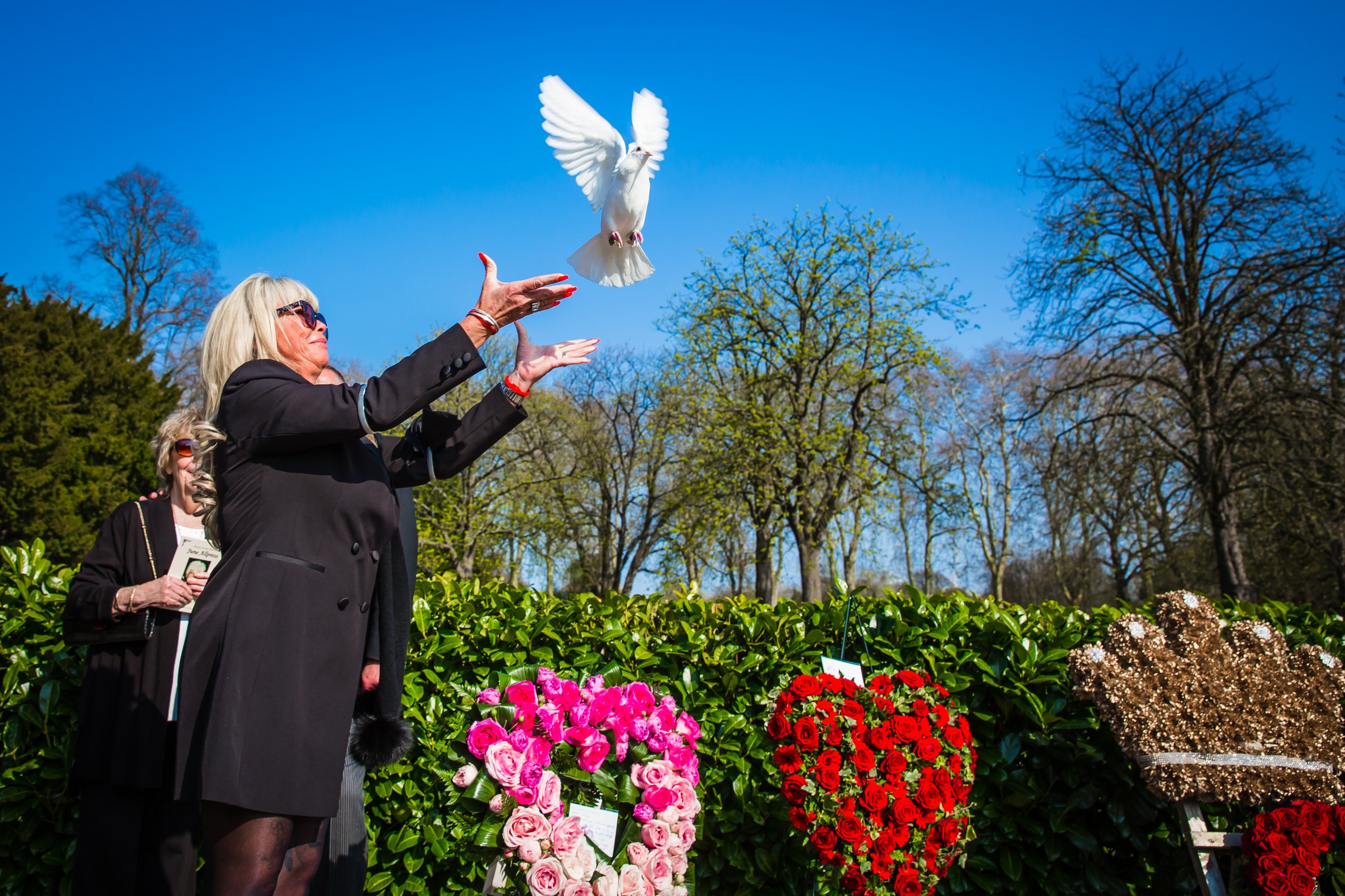
I've streamed services where a parent held their child's coffin, where a congregation of hundreds broke into spontaneous song, where a military guard of honour performed a final salute, and where a family quietly placed letters and photographs alongside their loved one before the coffin was closed. In every case, what I capture and what I don't comes from reading the room, listening to the family, and understanding that my role is to observe and record respectfully — never to intrude.
Privacy and Security
Privacy is one of the most important aspects of funeral live streaming, and families are always in full control of how the service is shared.
Streams are provided using secure private links, which can either be open or password-protected depending on the family's preference. In my experience, most families choose an open link — it makes access as simple as possible for those watching, particularly for older viewers or those less comfortable with technology. But when a family prefers a more restricted approach, I always provide a password-protected option and handle it exactly as they request.
The link is only ever shared by the family themselves, so they remain in complete control of who can access the service.
I also avoid public platforms that introduce adverts, interruptions, or the risk of music being muted due to copyright — which is a genuine and frustrating problem with YouTube and social media. Everything is hosted using professional streaming software designed specifically for funeral services, ensuring the stream remains uninterrupted, private, and focused entirely on the family.
You can read more about how this works in my guide on can you watch a funeral live stream later?
Why Families Choose to Live Stream a Funeral
For many families, live streaming is not just about technology — it is about connection.
It allows loved ones from around the world to be part of the service regardless of distance. It supports those who are unwell or unable to travel. It ensures that no one is excluded from saying goodbye.
Some of the most meaningful moments I've witnessed in this work have been families describing what the live stream meant to a relative watching alone from a hospital bed, or to a grandmother in her care home who watched her son's service on a tablet, or to a community of hundreds spread across four continents who gathered online to share in the same farewell at the same time.
The live stream also provides a lasting record. Families regularly tell me that being able to watch the service again — sometimes weeks later, when the initial shock has passed — helped them process their grief in a way they hadn't expected. For that reason, every stream I provide is recorded in full and available for 12 months, with a downloadable HD copy included. For more on this, see my guide on how funeral live streaming works.
Why Professional Funeral Streaming Matters
While it is possible to stream a funeral using a mobile phone or social media, the experience can be very different — and the risks are real.
Poor audio, unstable connections, music being muted mid-service, and intrusive setups can take away from the service rather than support it. A family member managing a phone is taken out of the service entirely — missing the moment themselves in order to capture it for others. And if the connection drops at a significant moment, there is no way to recover it.
A professional approach ensures everything is handled properly — from clear dedicated audio and multiple camera angles to four bonded internet connections and full local backup recording. When something is intended to be remembered, the quality matters. For more on the difference, see my guide on funeral filming vs live streaming.
In Summary
Live streaming a funeral is not about replacing being there in person — it is about including those who cannot be there.
When done properly, it becomes a respectful extension of the service, allowing people to share in the moment, pay their respects, and feel connected, wherever they are in the world. I've seen it bring comfort to families in ways that continue long after the day itself is over.
If you are considering live streaming a funeral and would like to talk through what might be right for your family, I'm always happy to have a conversation before you commit to anything.
Call or text me on 07772 509101 — I'm available seven days a week from 9am to 10pm — or get in touch online.
Related guides: